PC Mentoring Program
We won't find you a job. We'll help you create one.
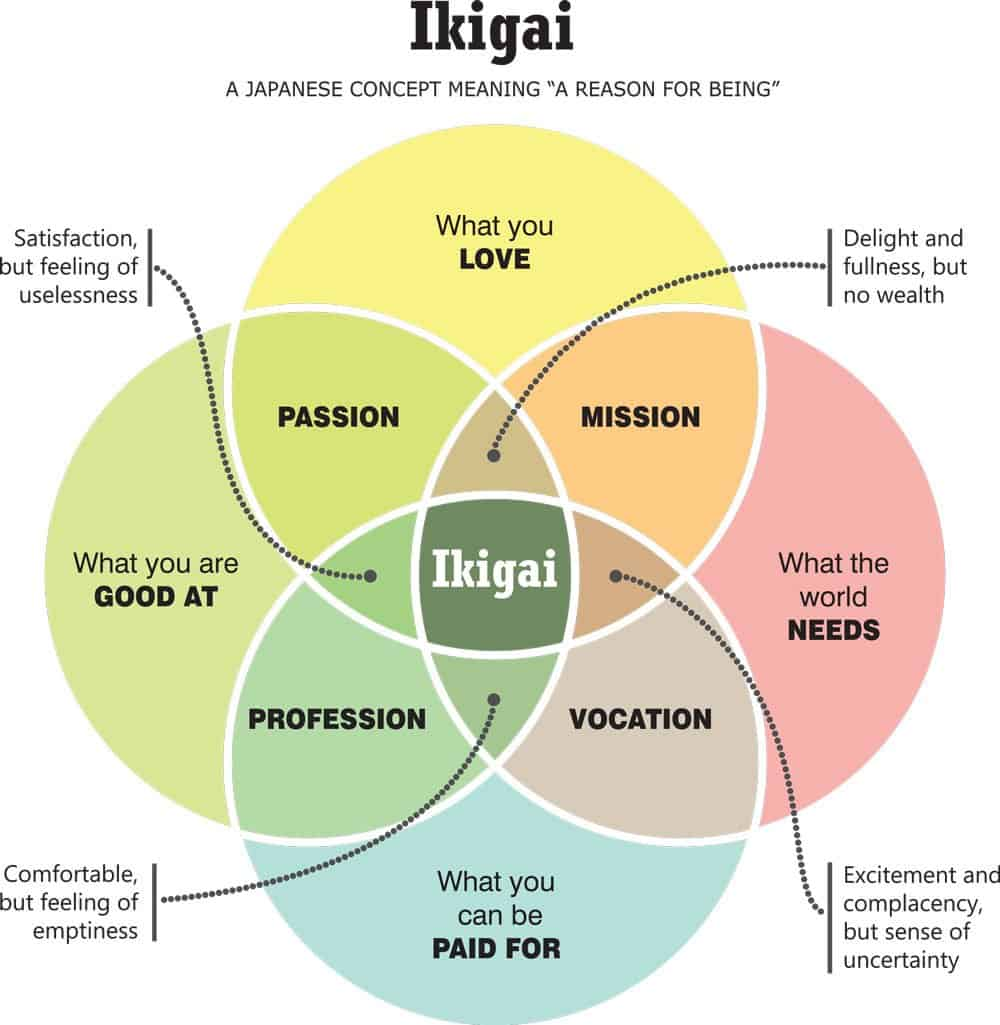
Description
A free mentoring program for people who want to work on things that matter and are tired of competing for the few jobs that get advertised. Five sessions of 45 minutes over two to four months, one method, and a volunteer mentor who knows the impact sector from the inside. You leave with a direction based on IKIGAI, a proposal addressed to someone who can say yes, and a 90-day plan. You also leave with a process you can run again on your own whenever you feel lost. Running since 2021, with mentees from about 30 countries.
Goals
- Turn the purpose-driven talent the impact sector attracts but cannot absorb into people who design and propose their own contribution.
- Move mentees from competing for advertised jobs to creating opportunities: offer before demand.
- Leave every mentee with a direction based on IKIGAI, a proposal to a real decision-maker, and a 90-day action plan.
- Make the method repeatable, so mentees can run the cycle again on their own and volunteer mentors can deliver it the same way.
Status
Get involved with PC Mentoring
Two ways in. Both start with reading this page. It's honest about what the program is and what it isn't, and that saves everyone time.
Why we do this
The impact sector attracts far more purpose-driven people than it can hire. Most of them get a polite no, or silence. We spent years inside large organizations watching this happen, and it bothered us.
The other problem is how people look. They start from job posts, which are scarce and crowded, and squeeze themselves into descriptions that were never written with them in mind. If they get in, half the job doesn't interest them. We call that frustration development, not career development.
So in 2021 we started mentoring with the opposite starting point: begin with what you have to offer, then find who needs it. Inside the organizations we know, real work that never gets advertised is everywhere. What's scarce is someone showing up with a specific, well-thought-out proposal. That someone can be you.
What you leave with
Three things you can show. And one you can't.
Your direction(s)
Based on IKIGAI: what you love, what you're good at, what your world needs, and what someone will pay for. Several options first, then one, chosen with criteria you set yourself.
A proposal to a real person
One page, in their language, addressed to someone who can actually say yes. Not a cover letter. Not an application.
A 90-day action plan
With names, dates, and the introductions your mentor can make.
The one you can't show is the ability to run the whole cycle again on your own, every time you feel lost.
Five ideas you'll hear more than once
- 1
Offer before demand.
We start from you, what you love, what you do well, what others see in you, and only then look at what organisations need. Starting from job posts puts someone else in the driving seat of your career.
- 2
Abundance, not scarcity.
Advertised vacancies are few; real needs are endless. Organisations are short of talent while turning away hundreds of applicants, because they still recruit against job descriptions, and writing one takes time nobody has. An offer that answers a real need, ready to run, can get a yes without a vacancy ever existing.
- 3
Functions, not titles.
Organisations do not hire “talent” or “potential”; they pay for functions and services. We will translate who you are into what you can do for them.
- 4
What others see matters more than what you think.
Opportunities come from other people, so their view of your value is the one that opens doors. We will check yours against theirs.
- 5
Direction, not decision.
There is no single perfect opportunity. We generate several, test them, and develop one now, knowing opportunities and directions will most likely change over the time.
How it works
Five sessions of 45 minutes, usually over two to four months. Between sessions you do homework, about two hours each time, and you book the next session only when it's done. Everything lives in one shared document, your Workbook, which you keep for the rest of your career and are welcome to reopen whenever you feel lost.
- Session 1
Intro
We check that we're a good fit for each other, agree on the commitments, and you write down what success would look like for you by the end.
- Session 2
My value
Four questions, answered in prose: what you'd do for free, what comes easily to you (and what others ask you for), what you're not good at, and what success looks like in five years. The hardest one is the third. It's hard for everyone.
- Session 3
Evidence and demand
We turn your answers into evidence, and into functions an organization understands. You ask three or four people for honest feedback, sent to your mentor so it stays honest. We name your fears. And we add the other half of the picture: what your world needs, and who could pay for it.
- Session 4
IKIGAI opportunities
At least three opportunities, built with the IKIGAI formula. You pitch them to your mentor, who plays the person who would have to say yes. We prioritize with explicit criteria, pick one, and sharpen it. You draft your proposal.
- Session 5
Action plan
Your final proposal, a 90-day plan, the people to reach, and the introductions your mentor can make. Then we close: a short evaluation, the option to join the Purpose Circle talent pool, and paying it forward.
After the program, we check in with you at three, six and twelve months. Partly to help. Partly because we want to know what happened.
What this program is not
Not a CV, cover letter or interview service.
We think those matter little until you know what you're proposing, and to whom. If a real opportunity shows up mid-program, your mentor will help you prepare, and will say so.
Not a job board.
We don't have vacancies. We have a method, a network, and some stubbornness.
Not coaching or therapy.
Your mentor is a practitioner of the sector who asks good questions, shares experience and opens doors. That's a lot. It's also the limit.
Not quick, and not for everyone.
The sessions are short; the homework is where the work happens. A fair number of mentees stop early, usually because the timing wasn't right. If the timing isn't right for you now, wait. We'll be here.
Who it's for
Same method, three kinds of people:
- Students and recent graduates who want a first foothold in the impact sector.
- Early-career professionals already inside an organization who want stability, progression, or a change of direction.
- Mid-career changers with strong skills, less sector knowledge, and a wish for meaning.
What we look for is the same in all three: real conviction, not just curiosity; some spark of engagement already there (volunteering counts); a bit of restlessness; and time available now. Ideally, you do this while you still have a job. Survival pressure and honest reflection don't mix well.
Our mentees so far come from about 30 countries, most of them outside the traditional donor countries.
What we ask of you
- 1.Finish what you start. Stopping halfway wastes your time and your mentor's.
- 2.Take it seriously and do it consciously. Write for yourself, not to be graded.
- 3.Do the homework within two weeks of each session.
- 4.Keep your Workbook updated with all your notes.
- 5.Book the next session only when the homework is done, at least 24 hours before.
- 6.Pay it forward. Once you land, donate to an NGO of your choice. That's the program's fee. We never see it.
- 7.Fill in the evaluation at the end. It's how the program gets better.
And what your mentor commits to
Reading your homework and preparing every session, keeping slots open in their calendar, taking notes and sharing your next task, sharing their experience and connections, introducing you to people when your proposal is ready, and completing their own evaluation. Nobody is paid for any of this.
How to apply
- 1. Fill in the application form. No CV needed. Honest answers needed.
- 2. The Program Coordinator reads it. If there's a fit and a mentor available, you get a mentor and your own Workbook. If no mentor is free yet, you go on the waiting list, and we'll tell you where you stand.
- 3. Read the first pages of your Workbook and confirm your commitment.
- 4. Book Session 1. That first conversation is also the fit check, in both directions.
It costs nothing. It never will.
For mentors
Want to mentor? Read this first.
We're looking for people who want to mentor, not people who want to be called mentors. The difference shows up around Session 2.
Who we're looking for
Senior practitioners of the impact sector: people who have hired, built teams, written proposals, and seen how organizations really decide. We're especially short of mentors from the private sector, social enterprises, and Africa. You need to believe that opportunities are created, not waited for, and be willing to follow a structure. There's plenty of room to be yourself inside it. There's no room to improvise the whole thing.
What you'd actually do
Five sessions of 45 minutes per mentee, with about 30 minutes of preparation each, because you read the homework before you meet. You ask more than you answer. You build the first IKIGAI example together. You play the hirer when your mentee pitches. And when the proposal is ready, you open your network. If your network doesn't fit your mentee's direction, the founders or another mentor make the introductions. Most mentors take one or two mentees at a time.
What you get from us
- A one-hour onboarding session.
- The Mentor Guide: every session explained, what good homework looks like, and what to do when things go off the rails.
- A call with the Program Coordinator before your first mentee, and a short check-in after each session of your first mentoring.
- A mentor profile on this site.
- The odd satisfaction of watching someone create a job that didn't exist a few months earlier.
Mentoring is volunteer work. We say that plainly because we'd rather you knew now.
Tell us you'd like to mentorQuestions people ask
Opportunities are created, not waited for. Consider this one created.
Questions? Write to juan@purposecircle.is.
Languages
Contributors


What participants and peers say. Click the heading or any card to read all testimonials.
Related story

The purpose mind: empowering the next generation of impactful leaders
Why younger generations seek purpose over stability — and how mentorship turns idealism into impact.
Read article